


Flow monitoring for hazardous areas
ATEX Flow Switches — Flow Monitors for Hazardous Areas
When flow monitoring in hazardous areas becomes a requirement, every detail of the equipment marking matters. STASTO offers flow switches whose ATEX version in the FM24 series is marked for gas and dust explosive atmospheres — complemented by a broad range of standard flow switches for oil, water, and compressed air.
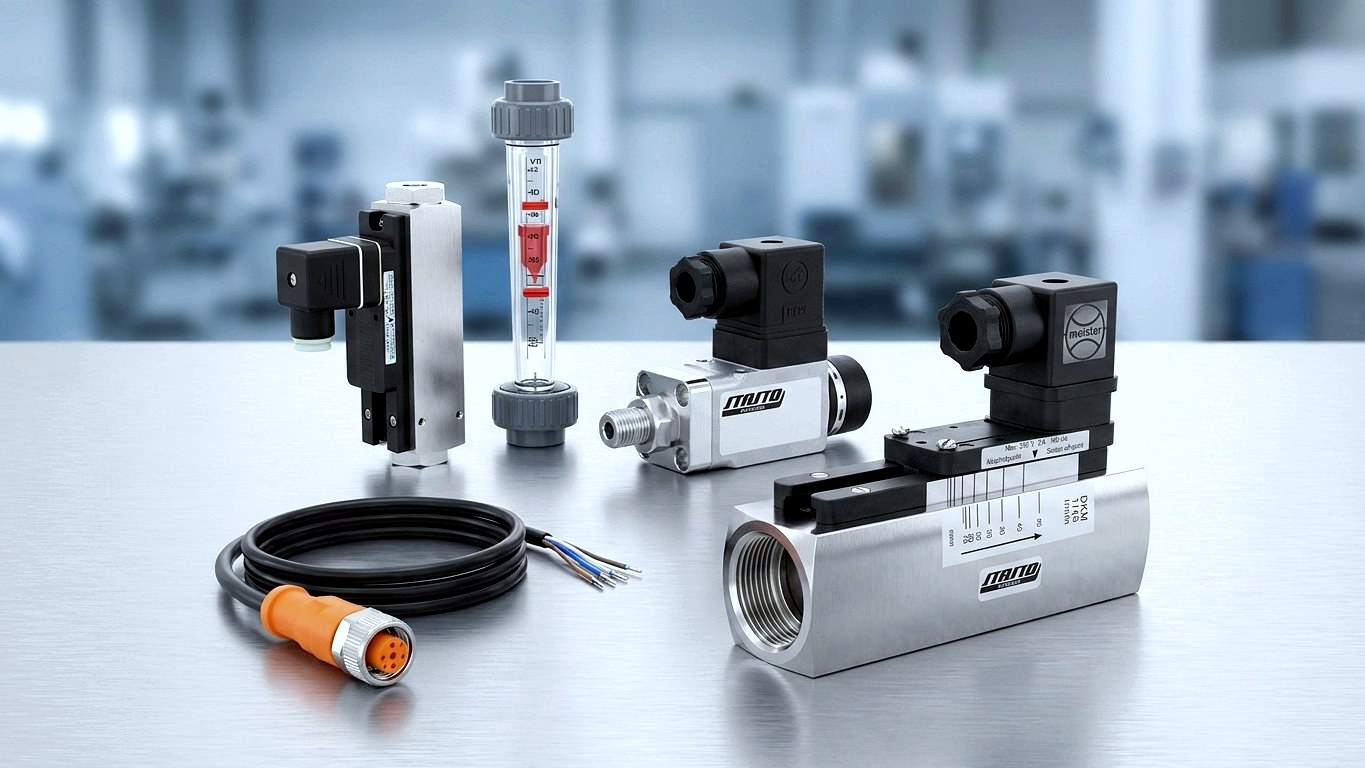
ATEX marking, FM24 series
Why STASTO
Flow switches with documented approvals
From viscosity-compensated monitoring of lubrication circuits to flow control in process engineering: you get the right series with documented approvals and technical sizing based on your application data.
ATEX version series FM24
The FM24 series flow switches carry the marking ATEX 2154X — Ex II 2G Ex mb IIC T6 Gb + Ex II 2D Ex tb IIIC T80 °C Db. This makes them suitable for use in gas and dust explosion hazardous areas of equipment category 2. Zone suitability must always be verified against the datasheet and operator classification.
Viscosity-compensated measurement
The oil-scale versions are viscosity-compensated (32…600 mm²/s) — suitable for reliable monitoring of lubrication circuits regardless of temperature fluctuations in the medium.
Robust materials
Depending on the series, housings are available in nickel-plated brass or stainless steel 1.4571. The ATEX series FM24 is manufactured in stainless steel 1.4571 — suited for demanding media and environments.
Expert advice, not guesswork
Zone, medium, connection size, switching range, and contact type determine the right variant. Our technical team sizes the appropriate flow switch based on your operating data.
Series overview
Flow Monitor Series at STASTO
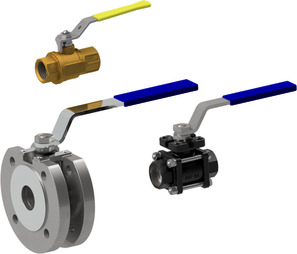
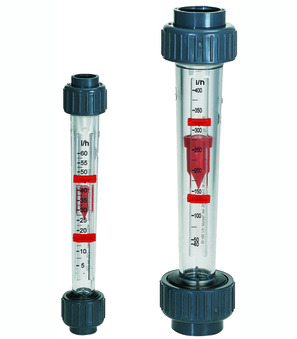
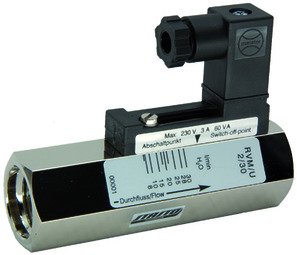
From the ATEX-rated FM24 series to viscosity-compensated oil scale designs and float-type variants for water and compressed air — including matching switching units.
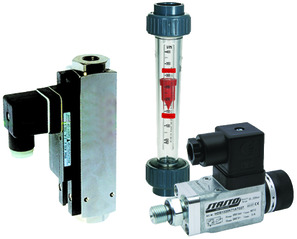
Guide
Selecting the Right ATEX Flow Switch
Marking, scale, and material determine suitability. The following points help with preliminary selection and preparing an inquiry.
Basics and Differentiation
- Flow Switch
- Has a switching contact (normally open or changeover) and signals when a set flow rate is exceeded or not reached to the controller.
- Flow Indicator
- Used for purely visual monitoring without a switching output — not suitable for safety and interlock functions.
- Flow Meter
- Measures flow as a measured value; sensor-based variants such as FM54 provide output signals, e.g. 4–20 mA or 0–10 V.
- Viscosity Compensation
- Keeps the switching point stable over a wide viscosity range of 32…600 mm²/s — important for oil and lubricants.
Reading the ATEX Marking
- Ex II
- Equipment group II — for use outside mining applications.
- Category 2
- High protection level; assignment to the specific zone is carried out by the operator based on the risk assessment.
- G and D
- G stands for gas-explosive atmosphere, D for dust-explosive atmosphere. The FM24 series is rated for both.
- Ex mb / Ex tb
- Types of explosion protection: mb = encapsulation, tb = protection by enclosure. Full marking of the FM24 Series: ATEX 2154X, Ex II 2G Ex mb IIC T6 Gb + Ex II 2D Ex tb IIIC T80 °C Db.
Material and Scale
- Stainless steel 1.4571
- For demanding media and environments; version of the ATEX Series FM24.
- Nickel-plated brass
- Proven standard material, also available with the RVM/U and DKM Series.
- Check the scale
- The oil, water, or air scale must match the actual medium, as the scale determines the switch point — an oil scale gives deviating readings with water.
Details Needed for a Quote
- Medium and viscosity
- Oil, water, aqueous medium, or compressed air — including viscosity for oil applications.
- Switching range and pressure
- Desired switching range in l/min as well as operating pressure.
- Connection and contact type
- Connection size, e.g. G3/4" or G1", and contact type, normally open or changeover.
- Zone and signal
- Required zone or ATEX requirement, and output signal needed, if applicable.
Series comparison
FM24, DKM and RVM/U compared
The three core series differ in marking, material and intended media. Refer to the respective product page for detailed values.
| FM24 | DKM | RVM/U | |
|---|---|---|---|
| ATEX Rating | ATEX 2154X, Ex II 2G / II 2D | Standard version; ATEX switching unit ES-DKM-W-ATEX available | Standard version |
| Housing Material | Stainless Steel 1.4571 | Nickel-Plated Brass or Stainless Steel 1.4571 | Nickel-Plated Brass |
| Scale | Oil Scale | Oil Scale | Water or Air Scale (RVM/U-L) |
| Viscosity Compensated | Yes, 32…600 mm²/s | Yes, 32…600 mm²/s | Float Principle |
| Switching Range (Examples) | 2…8 l/min, 8…24 l/min | approx. 0.5 l/min up to over 100 l/min depending on version | depending on variant; air scale at reference conditions |
| Connection | G3/4" or G1" | depends on version | depends on version |
| Contact type | NO contact | NO contact | NO or changeover contact depending on variant |
| Typical application | Hazardous areas, oil and lubricants | Lubrication and oil circuits | Water, aqueous media, compressed air |
Applications
Applications by medium and environment
Oil, water, or compressed air — and whether a potentially explosive atmosphere may occur: these two factors determine the right series for your application.
Hazardous Areas
Where a potentially explosive atmosphere may occur, the certified version is essential. The FM24 series is ATEX-certified for Group II, Category 2 (G and D). The specific zone suitability depends on the operator's risk assessment and the equipment marking stated in the datasheet.
Lubrication Circuits in Mechanical Engineering
Monitoring of lubrication circuits with viscosity-compensated oil-scale versions from the DKM, FM03/FM13 and FM24 series — the switch point remains stable across a wide viscosity range.
Water Handling in Process Engineering
For flow monitoring of aqueous media, versions with water scale are available, such as the RVM/U series. Media temperature, pressure and connection size determine the choice of variant.
Compressed Air and Gases
The air-scale version RVM/U-L monitors compressed air flow. The specified switching range refers to defined reference conditions — take this into account during sizing.
Cooling and Lubrication Points in Vehicle Manufacturing
In manufacturing and testing systems, flow switches monitor cooling and lubrication points. Depending on the medium, oil-, water- or air-scale versions are used.
Plants with Stainless Steel Requirements
Where stainless steel is required, versions with a 1.4571 housing are available. We'll work with you to determine suitability for the specific medium and cleaning conditions.
Availability & Designs
Design, Availability and Sizing
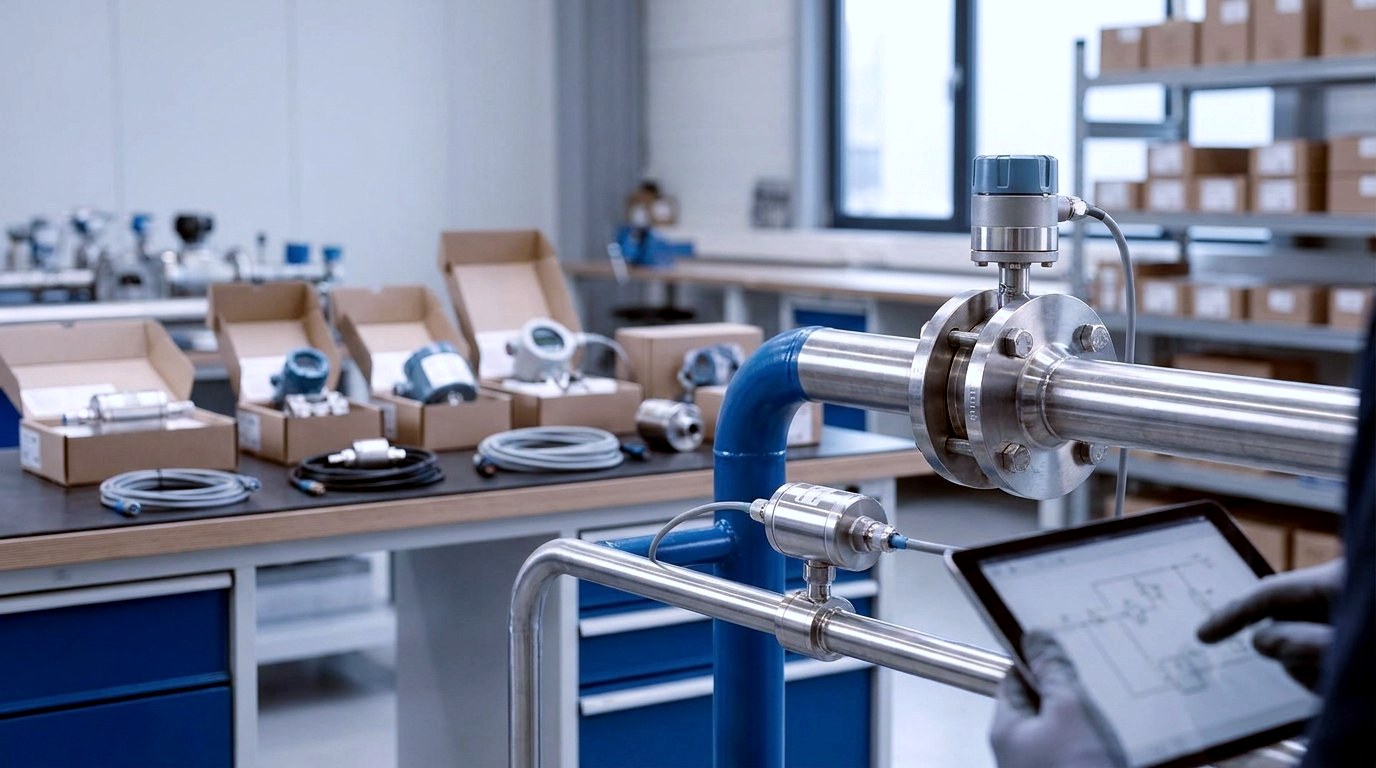
Our flow monitor range covers everything from compact sensor variants to designs for high pressures. Availability, design and lead time depend on the specific series and variant — please refer to the product page or contact us directly.
Connection Sizes
Depending on the series, for example G3/4" and G1" for the FM24 series.
Contact Types
Normally closed or changeover contacts, depending on the variant of the selected series.
ATEX Design
ATEX-rated design available via the FM24 series; other series in standard design, complemented by the ES-DKM-W-ATEX ATEX switching unit.
Quotation on Request
Sizing and quotation on request — including verification of the correct rating for your zone.
How selection works
Three steps to the right flow switch
To ensure the approval, scale, and switching range all match up, we follow a structured process.
Record application data
Medium and viscosity, switching range in l/min, operating pressure, connection size, contact type, and the required zone or ATEX requirement.
Define series and variant
We match your data to the right series — such as FM24 for hazardous areas, DKM for lubrication circuits, or RVM/U for water and compressed air.
Check marking and get a quote
We compare the device marking on the datasheet with your zone classification, then provide a quote including design and availability details.
FAQ
FAQ: ATEX flow switches
Answers on ratings, media, materials, and availability.
Does STASTO offer flow switches for hazardous areas?
Yes. The FM24 series carries ATEX approval (ATEX 2154X, Ex II 2G / II 2D) and is designed for Category 2 gas and dust explosion hazard areas. Refer to the datasheet of the specific variant for exact zone suitability.
Which media can be monitored with a flow switch?
Oil and lubricants, water and aqueous media, as well as compressed air. Viscosity-compensated oil-scale versions, water-scale variants, and the air-scale version RVM/U-L are available for this purpose. The right scale depends on the actual medium.
What is the difference between a flow switch and a flow indicator?
The flow switch trips an electrical contact once a flow set point is reached; the flow indicator only displays flow visually, without a switching output. For safety and interlock functions, the flow switch is therefore the right choice.
What does the Ex II 2G rating mean?
Ex II 2G designates a Group II device (non-mining) in Category 2 for gas explosion hazard atmospheres. For the FM24 series, the full rating is ATEX 2154X, Ex II 2G Ex mb IIC T6 Gb + Ex II 2D Ex tb IIIC T80 °C Db — mb stands for encapsulation, tb for protection by enclosure. Zone classification is carried out by the operator.
What material are the housings made of?
Depending on the series, either nickel-plated brass or stainless steel 1.4571. The ATEX series FM24 is manufactured in stainless steel 1.4571.
What switching ranges and pressures are possible?
This depends on the series and variant. The oil-scale versions, for example, cover ranges from a few l/min up to over 100 l/min; the FM24 series offers, among others, 2…8 l/min and 8…24 l/min at pressures up to 300 bar depending on the version. Exact values are listed on the respective product page.
Why is viscosity compensation important for oil?
Oil viscosity changes with temperature, which would shift the switching point. Viscosity-compensated versions keep the switching point stable across a range of 32…600 mm²/s, making them suitable for lubrication circuits.
How quickly is a flow switch available?
Availability and lead time depend on the specific variant. Please check the details on the product page or contact us directly — we'll tell you which version fits and when it's available.
Related ATEX Products
Matching additions for ATEX applications
For flow monitoring in hazardous areas, STASTO offers further ATEX-marked components.
Inquiry
Find the right ATEX flow switch
Tell us the medium, switching range, pressure, connection, and required zone — our technical team will select the appropriate series and prepare a quote with the correct rating.