




Pneumatics · Directional valves
3/2-way valves – pneumatic switching & control
3/2-way valves open, block, and vent an air flow via three ports and two switching positions – the foundation for reliable pneumatic controls in machine building, automation, and plant engineering. At STASTO, you'll find a broad range: from direct-acting solenoid valves to NAMUR designs for mounting on pneumatic actuators, through to the Series K and Series E+V product lines. Just tell us about your switching application – we'll recommend the right variant.
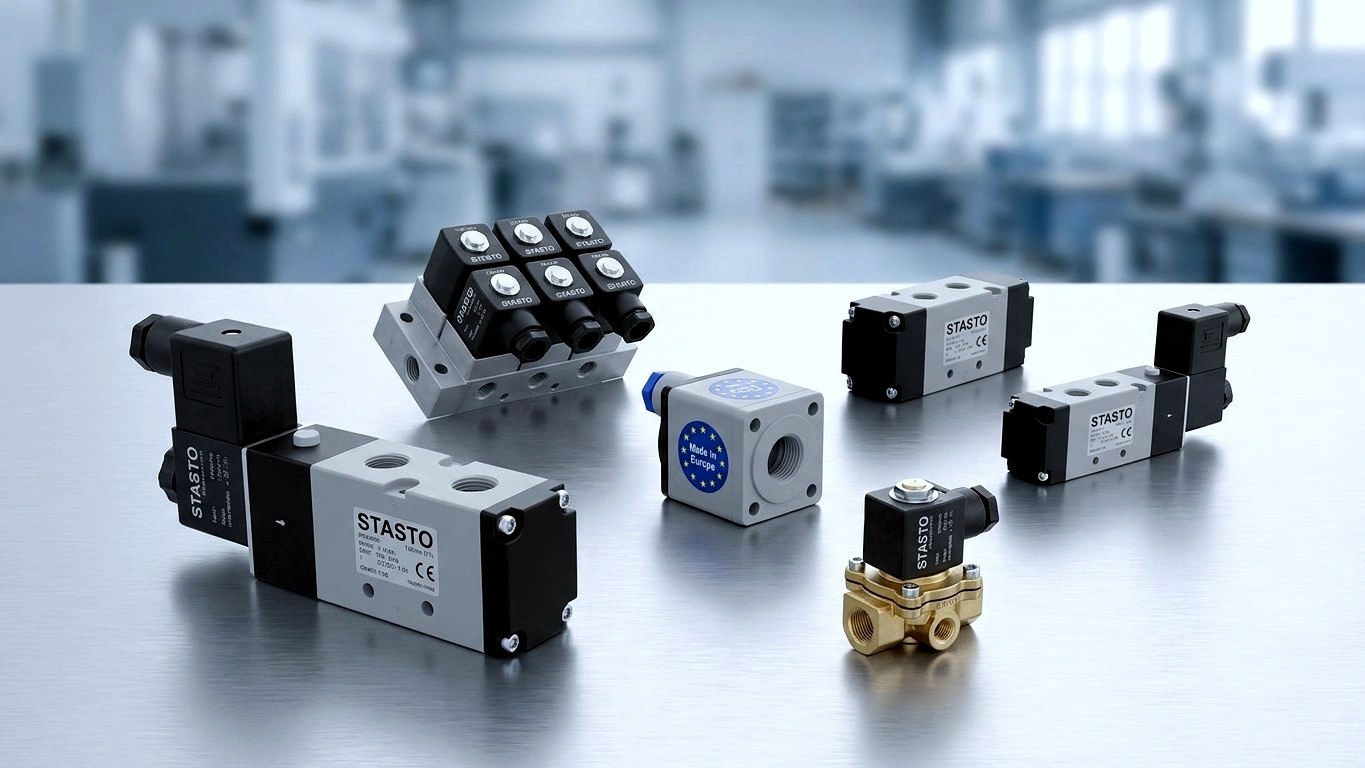
Direct-acting · NAMUR · Series K & E+V
Why STASTO
3/2-way valves from a single source
Whether a single 3/2-way solenoid valve or a coordinated valve combination – we help you choose the right series, actuation type, and port size.
Full functional range
3/2-way valves as normally closed (NC) and normally open (NO), monostable or bistable depending on series – for control, pilot, and exhaust functions.
Matching actuation
Solenoid-operated (3/2-way solenoid valve), pneumatic, mechanical, or manually actuated. Available actuation types vary by series.
Proven STASTO series
K3.W, E+V, and NAMUR combination series for direct mounting on rotary actuators. Exact technical specs per item in the datasheet.
Expert distributor support
B2B contacts for maintenance, engineering, and procurement – we assist with series selection, compatibility, and accessories.
Product range
3/2-way valves at a glance
From direct-acting pilot valves to NAMUR versions for actuators – choose the right series for your application.
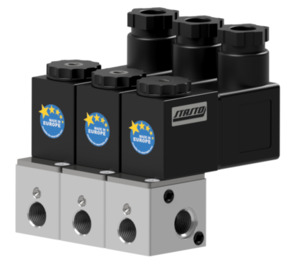
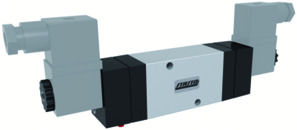
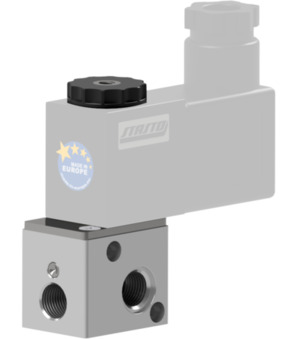
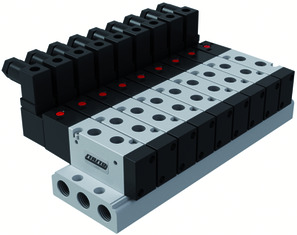
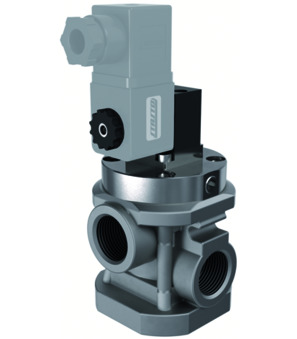
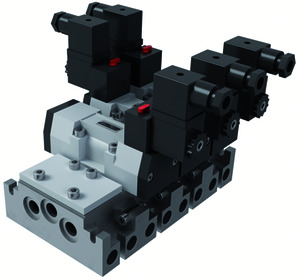
Variants compared
Direct-acting, NAMUR, Series K & E+V
The key 3/2 versions at a glance – exact specifications can be found in the datasheet of the respective series.
| Direct-acting | NAMUR | Series K | Series E+V | |
|---|---|---|---|---|
| Control principle | Direct | Direct/pilot-operated | depending on version | depending on version |
| Typical actuation | Electromagnetic | Electromagnetic | electr./pneum./mech. | electr./pneum./mech. |
| Connector width | depending on series | depending on series | 16 mm | 22 mm |
| Typical application | Pilot/control valve | Valve automation | Standard control tasks | higher flow rates |
| Direct mounting on rotary actuator | no | Yes | No | No |
Application Areas
Where 3/2-way valves are used
3/2-way valves are the standard component for single-acting control tasks in pneumatics.
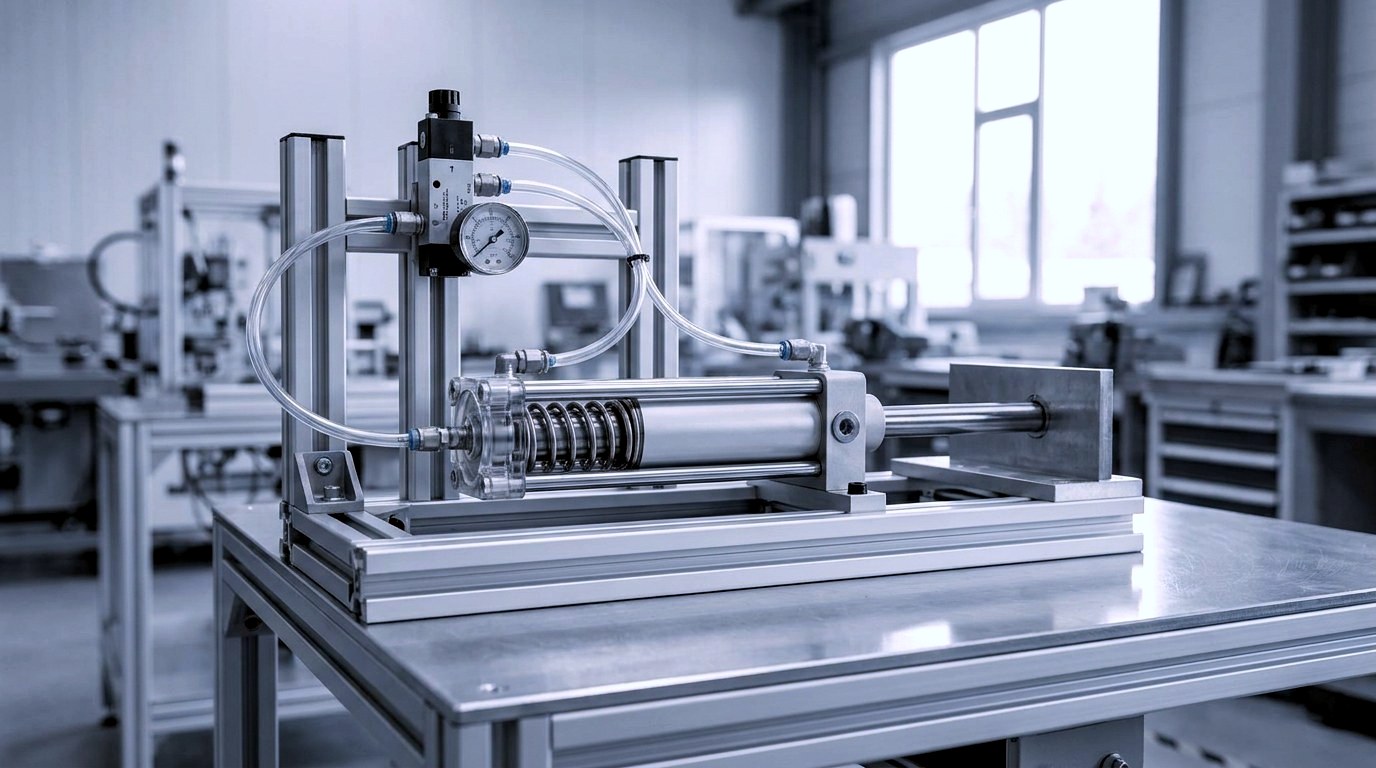
Single-acting cylinders
Extension via pressure supply, return via spring force after venting – the classic 3/2 control task in mechanical engineering.

Venting and exhausting
Safe shut-off and pressure relief of pneumatic consumers within the compressed air supply.
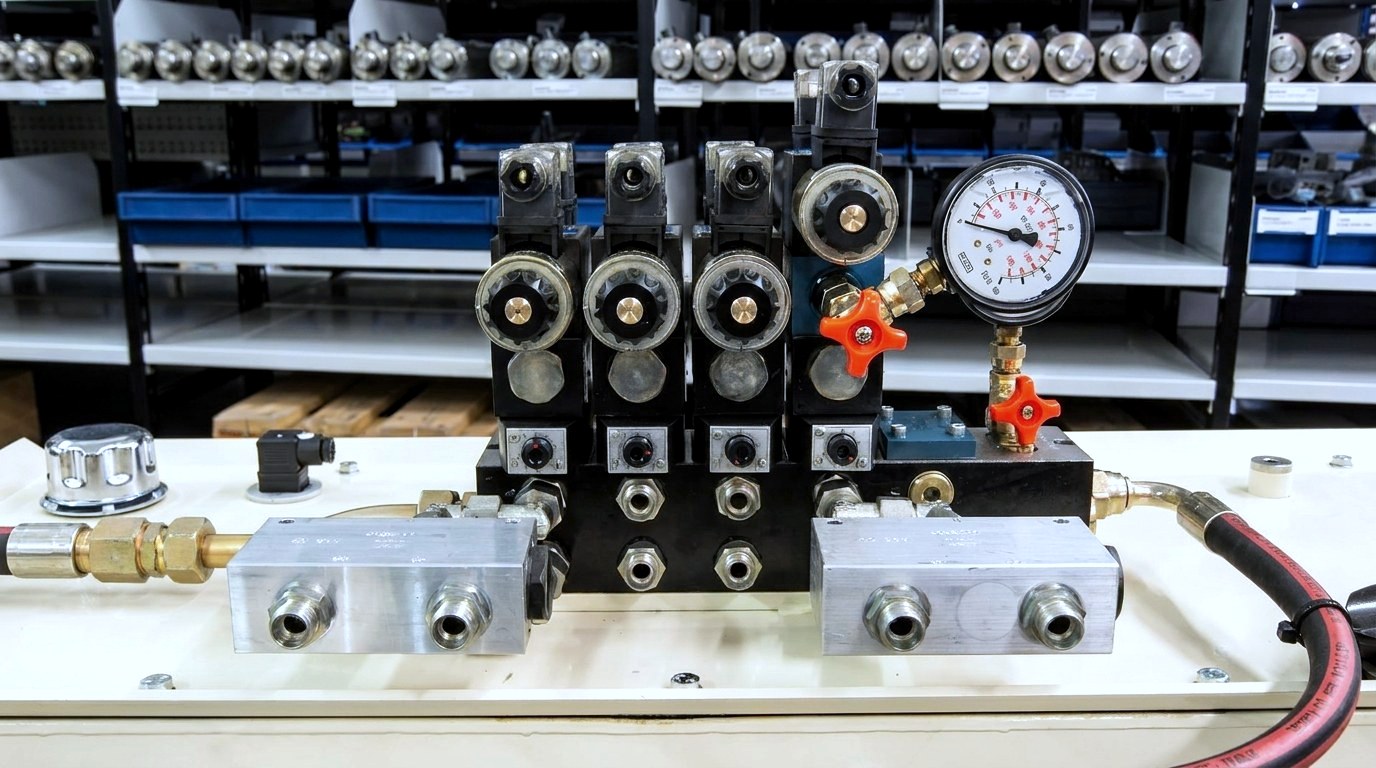
Pilot valve applications
Used as a pilot valve to actuate larger directional or process valves in process engineering plants.
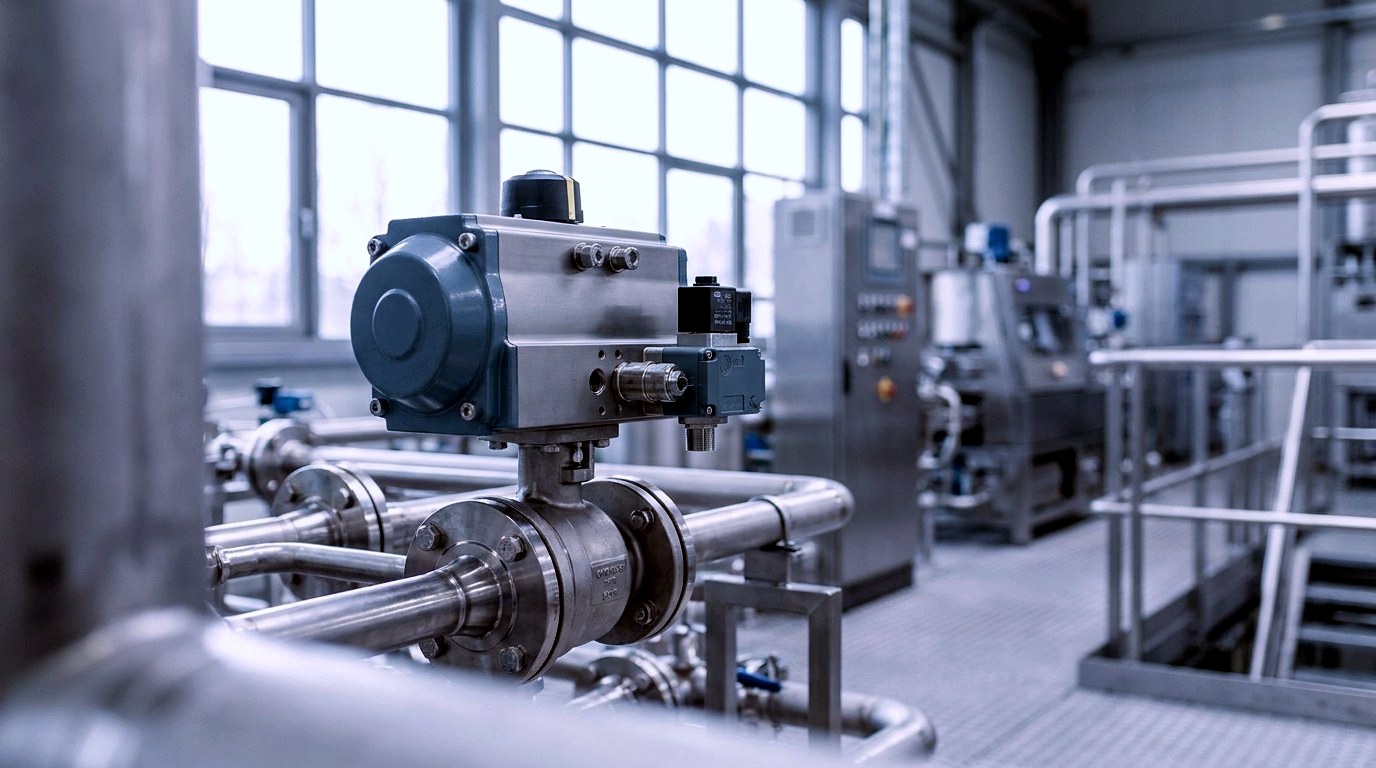
Valve Automation (NAMUR)
Direct mounting on rotary actuators for opening and closing process valves – without additional piping.
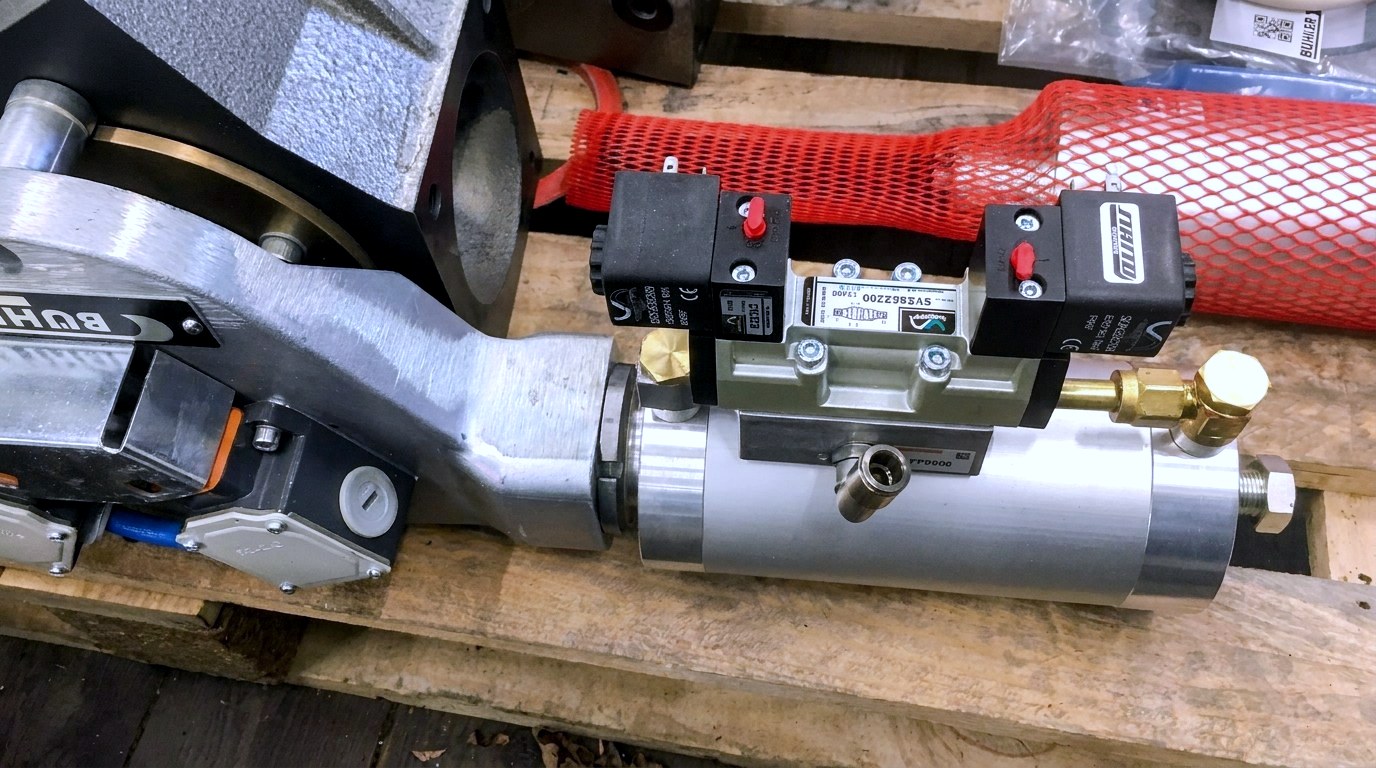
Pneumatic Actuation
Switching pneumatic functions in special-purpose vehicles and bodywork – compact valves for rugged environments.

Vacuum Switching
Switching vacuum in pneumatic systems – depending on series and version.
Buying Guide
How to choose the right 3/2-way valve
The key selection criteria at a glance – from the designation to the port size.
Basics & Function
- What does "3/2" mean?
- The first number indicates the number of ports (3), the second the switching positions (2): compressed air (P), working port (A), and exhaust (R/E), along with two switching states.
- Normally closed (NC) or normally open (NO)?
- In the rest position, a normally closed (NC) valve is blocked and only opens upon actuation; a normally open (NO) valve is open in its initial state. The choice depends on the fail-safe state required for your application.
- Basic function
- A 3/2-way valve supplies air to an actuator and blocks or exhausts it in the second position – the basis of many pneumatic control systems.
Selection & Technology
- Actuation type
- Solenoid-operated (3/2-way solenoid valve) for signal control, pneumatically operated for pilot pressure, mechanical/manual for local operation. Availability varies by series.
- Direct-acting or pilot-operated?
- Direct-acting valves switch independently of operating pressure and respond quickly; pilot-operated versions use the supply pressure and enable higher flow rates.
- Port size & flow rate
- Choose the port size and connection (e.g., thread) to match the required flow rate. Exact specifications can be found in the datasheet for the series.
Availability & service
Delivery, accessories and inquiries
We don't just supply valves, but the right setup for your control application.
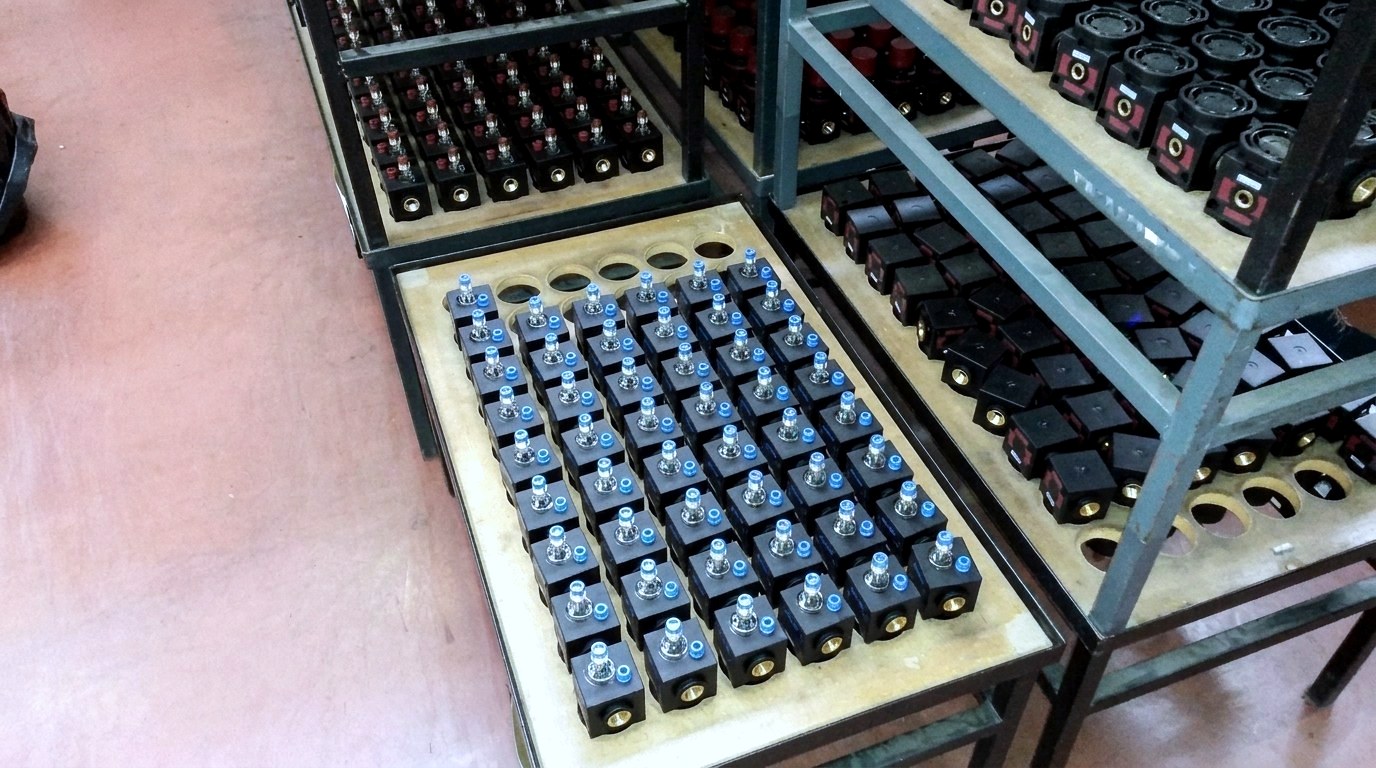
Availability
Many 3/2-way valves are available on short notice depending on series and variant; we're happy to provide specific availability and lead times for the selected item upon request.
Variants & accessories
Matching solenoid coils, connectors, mounting kits (e.g. NAMUR) and valve manifolds – depending on series and design.
Inquiry & quote
For project quantities, special designs or custom combinations, we'll prepare an individual quote for you.
Frequently Asked Questions
FAQ on 3/2-Way Valves
Answers to the most important questions about function, actuation, and selection.
What is a 3/2-way valve?
A 3/2-way valve has three ports and two switching positions. It can supply air to an actuator and, in the second position, block and vent it – the basic function behind many pneumatic control systems.
What is a 3/2-way valve used for in pneumatics?
Mainly for controlling single-acting cylinders, for supplying and venting actuators, as a pilot/control valve, and for switching vacuum.
What is the difference between a 3/2-way and a 5/2-way valve?
A 3/2-way valve typically controls single-acting actuators, while a 5/2-way valve has five ports and is used for double-acting cylinders. Matching 5/2-way models are also available from STASTO.
What do NC (normally closed) and NO (normally open) mean?
NC (normally closed) is blocked in the rest position, while NO (normally open) is open in the rest position. The choice depends on the desired fail-safe state.
What is a 3/2-way solenoid valve?
A 3/2-way valve with electromagnetic actuation: an electrical signal energizes the solenoid coil, which switches the valve. It's the most common actuation type for automated control systems.
What does the NAMUR design mean?
NAMUR refers to a standardized mounting interface that allows the valve to be mounted directly onto pneumatic rotary/linear actuators – without additional piping.
Which series is right for me?
This depends on flow rate, actuation, and installation situation. Series K (16 mm) and Series E+V (22 mm) cover many standard cases; for valve actuators, NAMUR designs are the preferred choice. We're happy to advise you on the right variant.
Related categories
Overview
Complementary directional control valves and series for your pneumatic control system.
Get started
Find the right 3/2-way valve for your control task
Browse the range or get direct expert advice – we'll help you match the series, actuation type, and accessories to your application.